Quick Actions: Turning an Exit Moment Into a Second Chance
Role: Lead UX Researcher (Official title: User Research Manager)
Org: SciPlay
App: Quick Hit
Churn Research · Product Strategy · Continuous Feedback
Overview
Most churn research happens after a player is already gone. This project started with a different question: what if we could reach players at the exact moment they decide to leave?
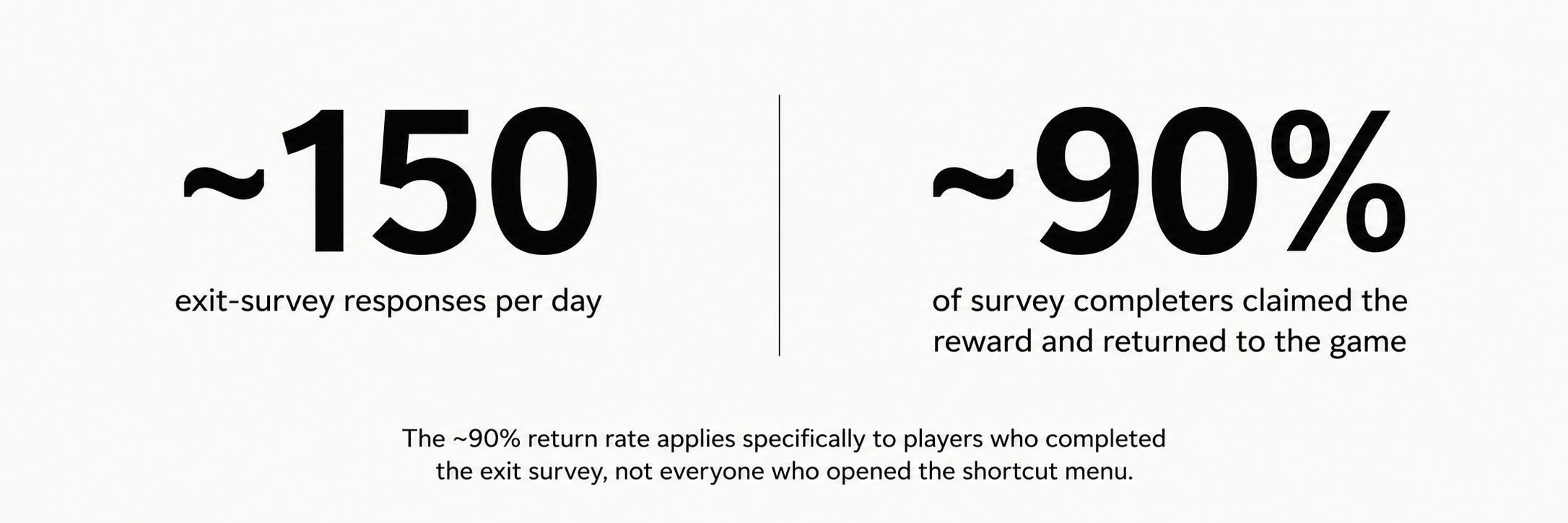
I turned that research insight into a native exit intervention that now captures ~150 responses a day and brings ~90% of survey completers back into the game.
The Problem
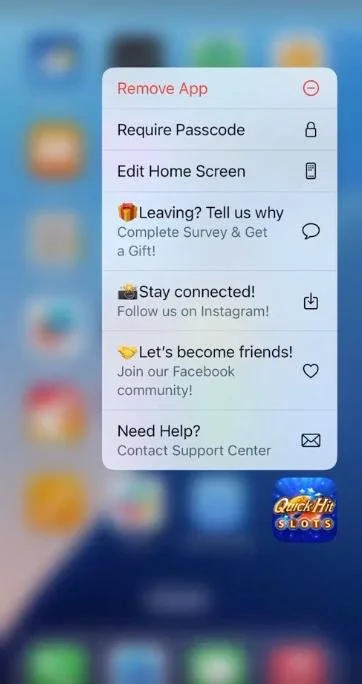
Quick Hit had a churn problem that was largely invisible until it was too late.
Once a player uninstalled the app, we lost both the opportunity to understand why they were leaving and the chance to address something that might have kept them playing.
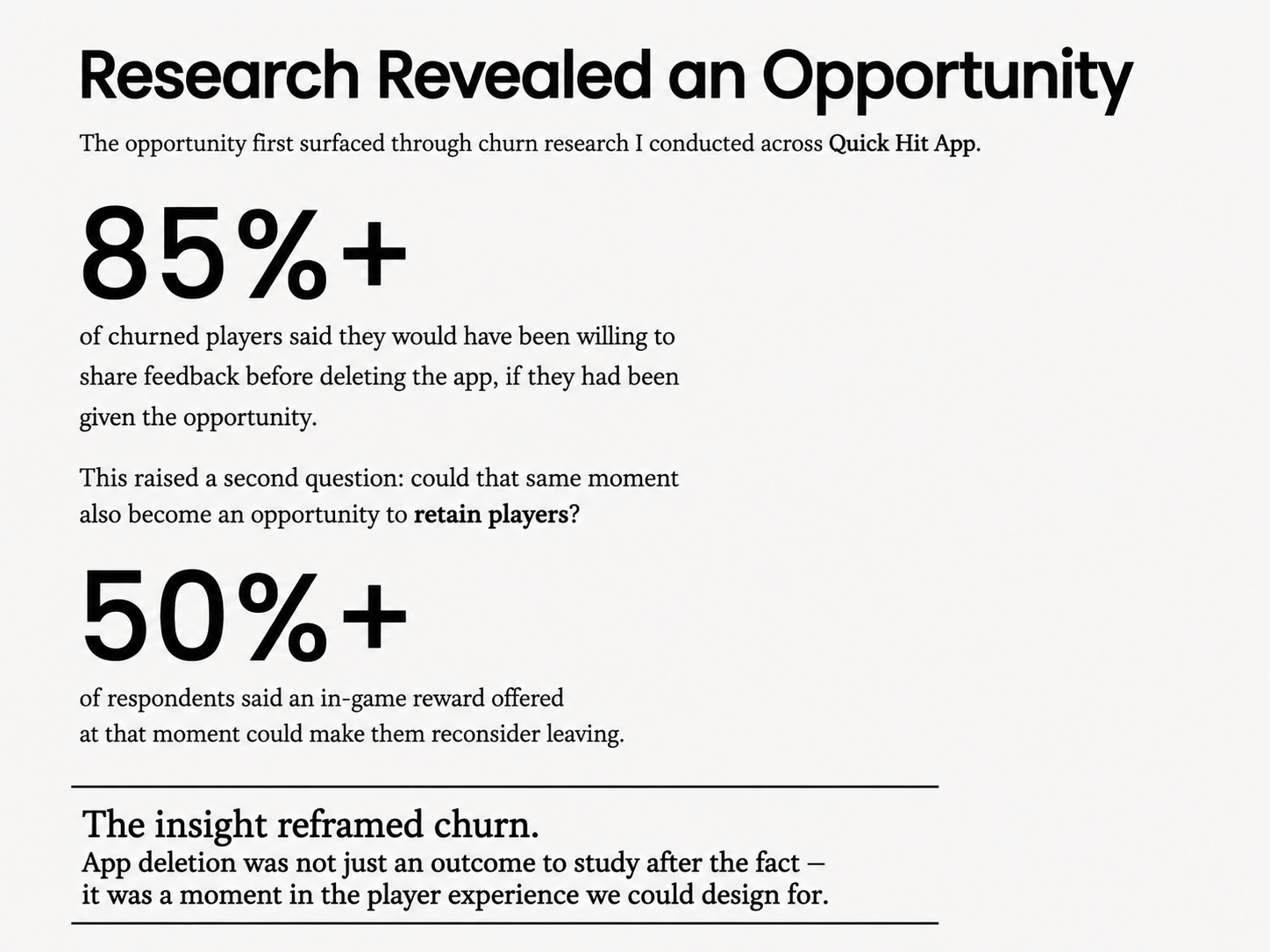
Traditional churn research could tell us what happened after the fact. I wanted to understand whether we could intervene before the decision became final.
Once the app was deleted, our opportunity to understand — or recover — that player disappeared with it.
From Research Insight to Product Intervention
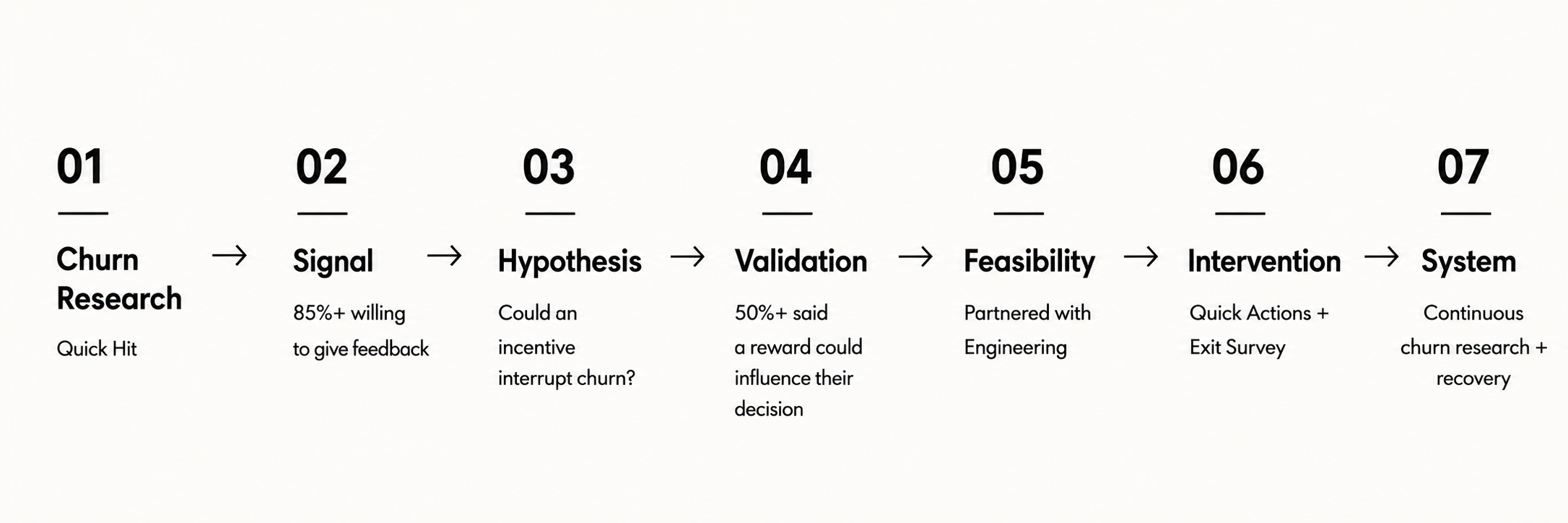
Rather than stopping at the research finding, I explored whether it could become a real product intervention.
I partnered with Engineering to assess whether we could reach players directly from the operating system at the moment they were considering deleting the app. Native shortcut functionality on both iOS and Android made that possible without requiring a major architectural change.
Designing the Intervention
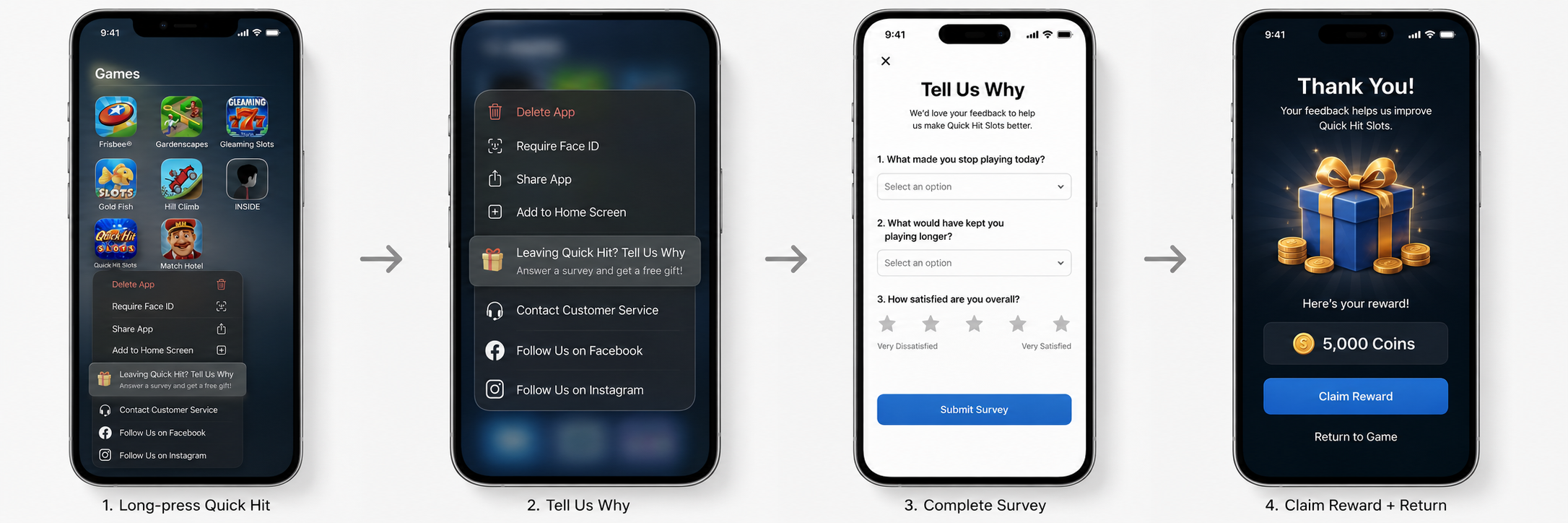
I proposed using native app-shortcut functionality already available on both platforms: iOS Quick Actions and Android App Shortcuts.
When a player long-presses the Quick Hit app icon, they see a new option:
“Leaving Quick Hit? Tell Us Why”
Selecting it opens a short three-question exit survey designed to capture:
what caused the player to stop playing
what might have kept them playing longer
their overall satisfaction
The survey was intentionally short. This was already a high-friction moment, so the research needed to capture useful signal without creating another reason to abandon the experience.
After completing the survey, the player receives a small coin gift through SciPlay’s existing reward infrastructure — both as a thank-you for their feedback and as a reason to open the game one more time.
Not Every Player Leaves for the Same Reason
The survey was not the only option I proposed adding to the shortcut menu.
A player reaching for the delete button might be frustrated, experiencing a technical issue, looking for help, or simply disengaging from the game. A survey was not necessarily the right response for everyone.
Rather than assuming every departing player needed the same intervention, the menu created multiple paths.
Give Feedback
Tell us why you're leaving and help us understand what could have improved the experience.
Get Help
Contact Customer Service directly if the reason for leaving is something support may be able to resolve.
Stay Connected
Follow Quick Hit on social media and remain connected to the community even outside the game.
The goal was to match the exit experience to the player’s actual need — not force every player into the same path.
Keeping the Research Lightweight
The exit survey had to balance two competing needs: gathering useful churn insight while asking as little as possible from someone who was already considering leaving.
I kept the instrument to three questions:
1. What made you stop playing today?
2. What would have kept you playing longer?
3. How satisfied are you overall?
Together, those questions captured the immediate churn trigger, potential retention opportunities, and overall sentiment without turning the interaction into a lengthy research study.
Design principle: capture enough signal to be useful without adding friction at an already high-friction moment.
From One Study to an Always-On Research System
Most research projects end with a report.
This one became part of the product.
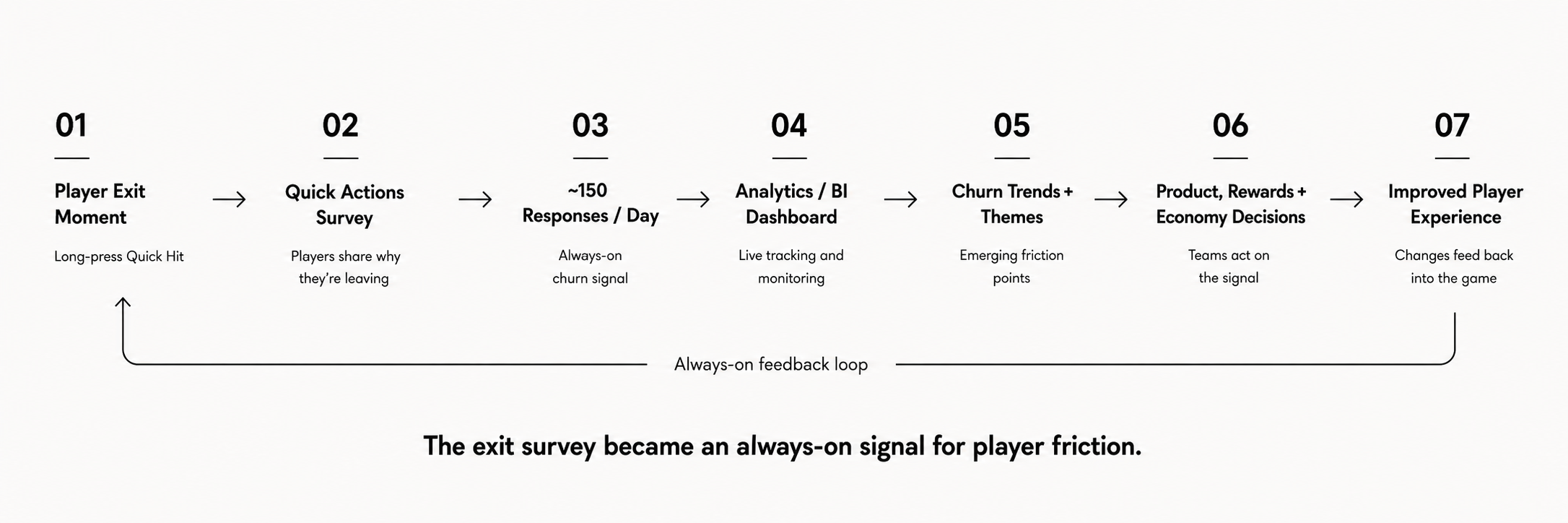
The exit survey now runs continuously, capturing feedback every time a player uses the feature. At full rollout, it generates approximately 150 responses per day, creating an ongoing signal about why players are leaving instead of a snapshot from a single study.
I partnered with Analytics and BI to turn the incoming responses into a live dashboard where product and business teams could track churn reasons and changes over time.
That made the research channel useful beyond the survey itself — teams could look for shifts in player sentiment alongside feature releases, rewards changes, or adjustments to the game economy.
The exit survey became an always-on signal for player friction.
Impact
At full rollout, the feature became both a research channel and a recovery mechanism.
What changed
Before
Churn insight was retrospective and episodic. Once a player deleted the app, the opportunity to learn from or re-engage them was largely gone.
After
Product and business teams gained an always-on signal for why players were leaving — while the same experience created a new opportunity to bring some of those players back.
The resulting feedback now contributes to ongoing conversations around rewards, coin economy, player experience, and monetization.
The Takeaway
This project changed the role research played in the churn experience.
What started as a finding in a churn study became a shipped product intervention, a recovery mechanism, and an always-on source of player insight.
Research didn’t just inform the product — the research insight became part of the product.